How Formal Education Shapes a Child’s Overall Growth and Learning
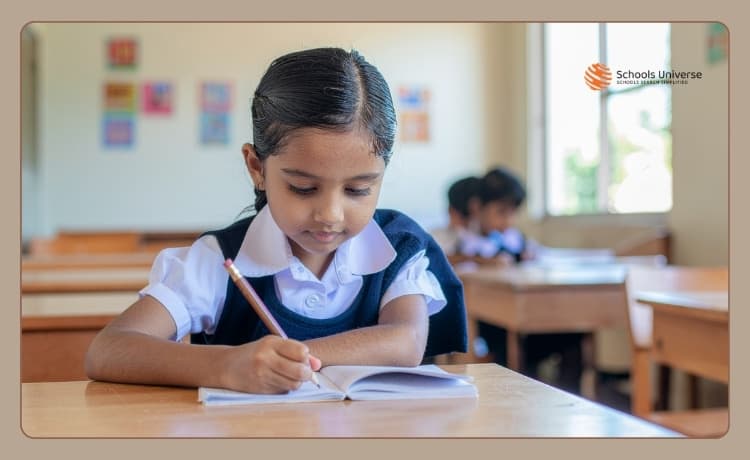
Long before a child walks through a school gate for the first time, they are already learning. They are grasping language from the conversations happening around them, behaviour by watching the adults they trust, cause and effect by dropping and breaking things, while also figuring out what happens next. None of this is planned or assessed. And yet, it is some of the most fundamental learning a human being ever does.
School, when it arrives, is something categorically different. It is structured, sequential and deliberate. It has a curriculum, a calendar and a teacher, who has been trained to teach. And it produces something that all the learning at home, however rich, cannot: a recognised qualification that opens doors.
These three distinct kinds of learning, formal education, non-formal education and informal education, each play a role in how a child grows. Understanding what separates them helps parents see not just what school does for a child, but why it does it in the way that it does.
What Formal Education Actually Means
The formal education meaning is simpler than it might sound. Formal education is the structured, school-based learning that takes place within an established system: schools, colleges and universities, with a set curriculum, trained teachers, a fixed academic calendar and assessments that lead to recognised certificates and degrees.
Most children begin this journey at nursery or kindergarten and carry it forward through primary school, secondary school and, for many, into higher education. The defining characteristic of formal education is that it is recognised. Governments and education boards acknowledge it, and the qualifications it produces carry genuine weight in the world outside the classroom.
What is Non-Formal Education and Where does it Fit
Non-formal education occupies an interesting space. It is organised and intentional, like formal education, but it is outside the mainstream school system, and it does not usually lead to formal qualifications.
Non-formal education includes vocational training programmes, adult literacy classes, after-school coding clubs, short art or music courses, community skill-building workshops. People pursue them with a clear purpose, to develop a specific skill or explore a particular interest, but without the structure of a school year or the outcome of a certificate.
For children, non-formal learning often runs alongside formal schooling, filling in what the curriculum does not cover and giving them room to pursue what genuinely interests them.
Informal Education: The Learning that Just Happens
Informal education is the third piece of the picture and, in many ways, the most quietly powerful. It is unplanned, unstructured and uncertified. It simply happens in the kitchen, on the street, in the back seat of the car, in every moment of daily life where a child is paying attention.
Formal and informal education are often discussed together because the contrast between them is so instructive. Formal education is deliberate: someone decides what will be taught, when and how. Informal education is spontaneous: a child picks up language, values, habits and understanding simply by living alongside people and making sense of what they observe.
Neither is superior to the other. They serve different purposes, and most children's development is shaped by both running in parallel, all the way through childhood.
The Difference between Formal and Informal Education
The clearest way to understand the difference between formal and informal education is to look at what each one produces and how it gets there.
|
Aspect |
Formal Education |
Informal Education |
|
Setting |
School, college or university |
Home, community, daily life |
|
Structure |
Fixed curriculum and timetable |
No fixed structure or plan |
|
Instructor |
Trained, qualified teachers |
Parents, peers, self-learning |
|
Outcome |
Certificates, degrees, grades |
No formal certification |
|
Nature |
Planned and deliberate |
Spontaneous and natural |
The difference between formal education and informal education is ultimately about structure and recognition. One is organised with a clear endpoint. The other simply unfolds. Non-formal education sits between them: organised like formal schooling, but without the certification or the institutional recognition.
How Formal Education Shapes a Child’s Growth
Once the definitions are in place, the more interesting question is what formal education actually does for a child over the years spent inside it. Here’s how it shapes growth in different ways.
- Builds structured thinking and discipline: A fixed timetable, regular assignments and a syllabus teach kids how to plan their time, meet deadlines and work towards goals, habits that stick around well into adulthood.
- Develops academic and cognitive skills: Subjects like language, maths and science are taught step by step, in an age-appropriate way, so children build knowledge gradually instead of picking things up randomly.
- Encourages social interaction in a guided setting: Classrooms bring together kids from different backgrounds, teaching them cooperation, teamwork and how to work through everyday conflicts with a teacher around to guide things.
- Gives consistent evaluation and feedback: Regular tests, report cards and teacher feedback give both kids and parents a clear sense of how things are going and what needs more attention.
- Opens up future opportunities: Certificates and degrees from formal education open doors to higher studies and career opportunities down the line, something informal or non-formal learning alone just can’t replace.
- Builds emotional and behavioural skills: Following classroom rules, respecting teachers and managing things like attendance and punctuality all add up to a child’s emotional maturity over time.
Why a Mix of all Three Matters
Formal education provides the backbone, but a child who only ever learns inside a classroom is missing something. The informal learning that happens at home, in conversations with parents, in the freedom to explore and make mistakes without being assessed, adds a dimension of warmth and personal meaning that no curriculum can fully provide. Non-formal activities, whether a weekend football club, a music class or an art workshop, give children the chance to pursue something for its own sake, without grades or expectations attached.
The most well-rounded children tend to have access to all three, solid formal schooling at the centre, informal learning woven through everyday life and occasional non-formal experiences that feed their particular interests and strengths.
What this Means for Parents Making School Choices
Understanding the formal education meaning and how it sits alongside informal and non-formal learning reframes what parents are really looking for when they choose a school. They are not simply looking for a building with classrooms and a syllabus. They are looking for an environment that will shape how their child thinks, how they relate to others, how they handle difficulty and how they understand their own abilities over a period of years.
That is not a small thing to get right. And it is worth approaching with the same deliberateness that formal education itself brings to the task of learning.
Exploring schools for your child? Visit Schools Universe to compare options and find a school that fits what your child needs.
Best Schools
- Best Schools in Hyderabad
- Best Schools in Bangalore
- Best Schools in Chennai
- Best Schools in Gurgaon
- Best Schools in Pune
- Best Schools in Kolkata
- Best Schools in Mumbai
- Best Schools in Jaipur
- Best Schools in Indore
- Best Schools in Thane
- Best Schools in Bhopal
- Best Schools in Nagpur
- Best Schools in Aurangabad
- Best Schools in Jodhpur
- Best Schools in Jabalpur
- Best Schools in Noida
- Best Schools in Delhi
CBSE Schools
- CBSE Schools in Kolkata
- CBSE Schools in Chennai
- CBSE Schools in Hyderabad
- CBSE Schools in Bangalore
- CBSE Schools in Pune
- CBSE Schools in Mumbai
- CBSE Schools in Jaipur
- CBSE Schools in Nagpur
- CBSE Schools in Thane
- CBSE Schools in Aurangabad
- CBSE Schools in Jodhpur
- CBSE Schools in Indore
- CBSE Schools in Jabalpur
- CBSE Schools in Bhopal
- CBSE Schools in Gurgaon
- CBSE Schools in Noida
- CBSE Schools in Delhi
Get In Touch
Your questions deserve expert answers Let's Talk